The Walk of Shame
The Story
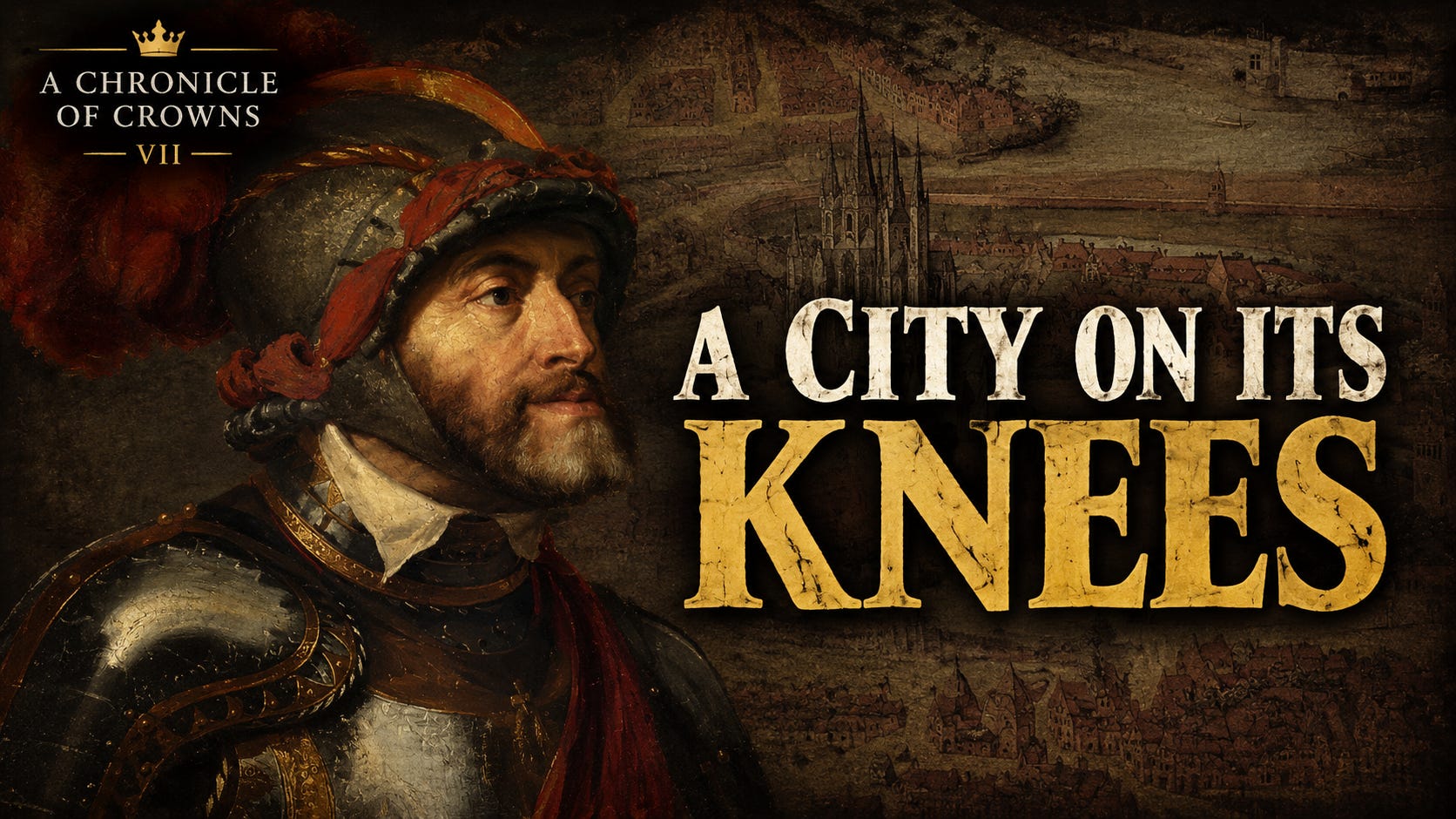
King Charles V, the Holy Roman Emperor, was nothing if not a drama-queen.
It was indeed befitting of him, he was an emperor, you see. You do not rule through power alone, no no, you rule through perception of said power. And this requires a certain amount of flamboyance that well suits a man who was born on the toilets of a palace but would inherit half the world. The drama had been scripted in advance by higher powers, one could be led to believe.
And the drama truly comes alive at Charles’ home-coming. He leaves the Low Countries around 1517 to make the crossing to Spain and steal the crown actually belonging to his mother. So much of his father in him. Charles would not return to Ghent for almost 25 years. And when he finally does, the return would be…
Dramatic.
Charles V was Emperor of an empire in name alone. The vast, expansive area of terrain he ruled over was in fact, in the sixteenth century, almost incomprehensible, let alone manageable. Wars erupted on all sides. He fought the French, the Ottomans, he faced Maarten Luther, his religious nemesis and most of all he spent money. He spent tons and tons of money. He burned right through all the gold that was being imported from Latin America. Quite the achievement, mind you. All that raw gold coming into the empire and still he managed to pile up debts of up to 6 times whatever he had coming in. The debt kept going up, together with the inflation (which sounds painfully familiar) and Charles V gravely needed some dolladollabills.
And so he came to remember the dear city that had celebrated his birth with a golden dragon breathing fire over its rooftops. He now remembered Ghent, that proud city of which famous humanist Erasmus said, in 1529, there was no city in Christendom to match it in size, power, organisation and character. He remembered the city and he remembered its riches. He could damn well use some of it.
What Would Charles Do? Probably not this =>
Taxes, taxes, taxes…
So, he levies a tax. Oh no, not just from Ghent. He levies a tax from all the cities of the Netherlands. In 1537 it is made official through his sister, Maria of Hungary. She sits as regentess of the Netherlands in Charles’ name. One day soon I will talk of her ridiculously outrageous collections, such as the entire palace she had just for her large group of dwarves, as in dwarves she owned. Let’s call it a good reason to come back to the podcast at a later date.
When confronted with the tax, Ghent flat-out refused and asked amnesty, citing poverty, high food prices and lack of trade. Ghent offered troops instead of money, but it was money Charles craved. Things start going bad fast. While Ghent is still trying to negotiate through Maria, urging to see Charles in person, they are also secretly offering their fealty to his arch-nemesis, the French King Francois I. He went to tattle on the Ghentians to the big-chin himself. Charles did not receive the news with pleasure, to say the least. Now there was no wiggle room left for negotiating, things started escalating.
The takeover
The craft guilds of Ghent had reached a collective decision it seemed, they would do as they did with Charles’ grandfather and as they had done many times before. They will rise up and take back their city. With Charles’ grandfather, the rebellion actually didn’t go too well for Ghent. Ghent won the battle but not the war and they end up signing a treaty that strips them of their sovereignty in 1492. They will reclaim their independence now, once and for all!
All crafts except the free boatmen, butchers and fishmongers went on strike, and their deans occupied the city gates in August 1539 and organised the defence. Lieven Pyn, a former alderman and chief dean, was arrested on 19 August, tortured for five days and beheaded, accused of betraying Ghent in the tax negotiations. The hated document that took away their independence, the Calfvel, was fetched from the archive and publicly torn up. The heat was on.
Charles and Mary feared Ghent would ignite the powder keg of Flanders again. Oudenaarde, Kortrijk, Geraardsbergen and Ninove declared solidarity, which echoed the scenario under Maximilian fifty years earlier. Mary wrote a letter to Charles stating that the question was whether he would keep his power or end up master or servant. The rebels threatened to lock her up in a convent to get rid of her. On 26 September 1539 she had to sign an accord returning all old privileges. Just like her grandfather did, she signs the documents under duress. It was official; Ghent was back, baby!
The Return of the Charles
Charles was not doing too great, really. On top of having an empire the size of half of the world to rule, so not a lot of leisure, he was also physically declining. Maybe due to the bad genetics incest wreaks upon a man, maybe due to the tremendous work-related stress. Either way, he suffered from serious bouts of gout. He had gout attacks that left him temporarily paralysed with pain and bedridden. According to the chroniclers, he often sought solace in the sinful behaviour of gluttony. In Spanish they summed it up thusly; “de la misa a la mesa”, from the Mass to the table. Everyone needs something to relax and for Charles it was stuffing his face.
Charles’ wife, Isabella, passed away on 1 May 1539. To add to this painful lot, she had given birth to a stillborn son. She herself lived on for ten days after losing the baby, fully conscious right until the moment of her death. Charles, however, did not arrive on time to say goodbye. Though their relationship is chronicled to be little more than diplomatic, her death left Charles quite devastated. Much like his aunt Margaretta, he would don the black of mourning for the rest of his days and never remarry. Now all of the pain in his heart and the pain in body would crystallize and be concentrated on this thorn in his side. Ghent would be taken care of.
A Good Preparation is Half the Work
To get from Spain to Ghent, there was either a big mother loving ocean or a big frankenfurting hostile kingdom in between. The ocean of winter holds many dangers that Charles did not feel fantastic about facing. The French King François I on the other hand had only just moments ago tattletaled on the Ghentians so maybe the kingdom wouldn’t be so hostile after all.
It turned out not to be, in fact. Quite chummy in fact. François I not only let Charles pass, he accompanied him for most of the trip! They went hunting together many times and even spent a night in the same room according to the chroniclers. He travelled with Charles from Paris till Saint-Quentin and supposedly waved him off at the border. Really romantic.
When Charles gets to Valenciennes to meet his sister he starts to plan. He has a mind of celebrating his 40th birthday in style. Much like 40 years before his baptism had been in style. He would have it be a day the Ghentians would never forget.
Instead of going to Ghent, he waits with his troops and sends Adriaan van Croÿ ahead as a last warning. Feigning Charles isn’t close at all, Van Croÿ presents his case and is welcomed warmly by shackles and the threat of a prison cell. He manages to escape nonetheless.
On 14 February 1540 Charles entered with an army of nearly 4,000 knights, 4,000 archers and 800 officers, in an entry that took only six hours. There is told to be as many as 15,000 horses stampeding through the streets. Four German regiments took the Vrijdagmarkt and cannons were placed on every street corner. The city was firmly taken. Now Charles would make his point and fix it so it stayed made.
He went to the Prinsenhof, where he had been born nearly forty years earlier, and waited patiently for ten days till his special day, 24 February, his 40th birthday. That’s when he had the magistrates come for an audience and demanded that the aldermen be punished and replaced. Arrest warrants for 25 leaders were issued and read. What a way to spend your birthday.
Blood & Verdict
In total, nine of the accused were publicly…
This is a public episode. If you'd like to discuss this with other subscribers or get access to bonus episodes, visit kobione.substack.com/subscribe
King Charles V The Holy Roman Emperor was nothing if not a drama queen.
It was, indeed, very befitting of him. He was an emperor, you see. You do not rule through power alone. No, no. You rule through perception of said power. And this? This requires a certain amount of flamboyance that well suits a man who was born on the toilets of a palace but would inherit half of the world. The drama had seemingly been scripted in advance by higher powers, one could really be led to believe. And the drama truly comes alive at Charles' homecoming. He leaves the Low Countries around 1517 to make the crossing to Spain and steal the crown actually belonging to his mother.
There's so much of his father in him. Charles would not return to Ghent for almost 25 years. And when he finally does, the return would be, you've guessed it, dramatic.
Charles V was emperor of an empire in name alone. The vast, expansive area of terrain he ruled over was, in fact, in the 16th century, almost incomprehensible, let alone manageable. Wars erupted on all sides. He fought the French, the Ottomans, he faced Martin Luther, his religious nemesis, and most of all, he spent money. He spent tons and tons of money. He burned right through all the gold that was being imported from Latin America. Quite the achievement, mind you. All that raw gold coming into the empire, and still he managed to pile up debts of up to six times whatever he had coming in.
The debt kept going up, together with the inflation, which sounds painfully familiar, I know, and Charles V gravely needed some dollar-dollar bills. And so he came to remember... That dear city that had celebrated his birth with a golden dragon breathing fire over its rooftops. He now remembered Ghent. That proud city of which famous humanist Erasmus said in 1529, there was no city in Christendom to match it in size, power, organization and character. He remembered the city and he remembered its riches.
He could damn well use some of it.
Welcome to the channel. I'm Kobi One and here you get some nice juicy medieval drama every single week. Make sure to subscribe and hit that like button because that kind of stuff really helps the channel grow. Now let's find out what sense and type of drama that Charles has in store for us. [music] So, Charles, he levies a tax. Oh, no, no, no, no. Not just from Ghent. No, he levies a tax from all the cities of the Netherlands. In 1537, it is made official through his sisters. Maria of Hungary. She sits as Regentess of the Netherlands, in Charles' name.
One day soon, I will talk of her ridiculously outrageous collections, such as the entire palace she had, just for her large group of dwarves. As in, dwarves she owned. Well, let's just call it a good reason for you to come back to the podcast at a later date. When confronted with the tax, Ghent flat out refused and asked amnesty, citing poverty, high food prices, lack of trade. Ghent offered troops instead of money, but it was money Charles craved. Things start going bad fast. While Ghent is still trying to negotiate through Maria, urging to see Charles in person, they are also secretly offering their fealty to his arch-nemesis, the French king François I. He then went to tattle on the Ghentians to the big chin himself.
Charles did not receive the news with great pleasure, to say the least. Now, there was no wiggle room left for negotiating. Well, things started escalating.
The craft guilds of Ghent had reached a collective decision, it seemed. They would do as they did with Charles's grandfather, and as they had done many times before. They would rise up and take back their city. With Charles' grandfather, the rebellion actually didn't end too well for Ghent. Ghent won the battle, but not the war. And they end up signing a treaty that strips them of their sovereignty in 1492. Well, they will reclaim their independence now, once and for all. All crafts, except the three boatsmen, butchers and fishmongers, went on strike and their deans occupied the city gates in August 1539 and they organized their defense.
Lieven Pein, a former alderman and chief dean, was arrested on 19 August, tortured for five days even though he was well into his seventies and then beheaded. Accused of betraying Ghent in the tax negotiations.
The hated document that took away their independence, the colifvel, was fetched from the archive and publicly torn up. The heat was on. Charles and Mary feared Ghent would ignite the powder keg of Flanders once again. Oudenaarde, Kortrijk, Gerardsbergen and Nienhoven declared solidarity with Ghent, which echoed the scenario under Maximilian fifty years earlier. Mary wrote a letter to Charles stating that the question was whether he would keep his power or end up master or servant. Urging him to come to the Low Countries.
The rebels threatened to lock her up in a convent to get rid of her. But on 26th September, 1539, she signs an accord, returning all old privileges.
Just like her grandfather did, she signs the documents under duress and it was made official. Ghent was back, baby. [music] Charles was not doing too great, really. On top of having an empire the size of half of the world to rule, so not a lot of leisure, he was also physically declining. Maybe due to the bad genetics incest wreaks upon a man, maybe due to the tremendous work-related stress. Either way, he suffered from serious bouts of gout. Sounds delicious, but it's awful. He had gout attacks that left him temporarily paralyzed with pain and bedridden.
According to the chroniclers, he often sought solace in the sinful behavior of gluttony. In Spanish, they summed it up thusly, de la misa a la mesa, from the mass to the table. Everyone needs something to relax, and for Charles, it was stuffing his face. Charles's wife, Isabella, passed away on the 1st of May, 1539. To add to this painful lot, she had given birth to a stillborn son. She herself lived on for ten days after losing the baby, fully conscious right until the moment of her death. Charles, however, did not arrive on time to say goodbye.
Though their relationship is chronicled to be little more than diplomatic, her death left Charles quite devastated. Much like his aunt Margareta, he would don the black of mourning for the rest of his days, in fact, and he would never remarry. Now, all the pain in his heart and all the pain in his body would crystallize and be concentrated on the storm in his side. Ghent Would be taken care of. [music] To get from Spain to Ghent, there was either a big mother-loving ocean or a big frankenfurting hostile kingdom in between.
The Ocean of Winter holds many dangers that Charles did not feel fantastic about facing. The French King Francois I, on the other hand, well, he had only just moments ago tattletailed on the Gendians, so who knows? Maybe the kingdom wouldn't be so hostile after all. It turned out not to be, in fact. Quite chummy, in fact. Francois I not only let Charles pass, he accompanied him for most of the trip. They went hunting together many times, and even spent a night in the same room, according to the chroniclers.
He traveled with Charles from Paris till Saint-Quentin, and then he supposedly even waved him off at the border. How very romantic. When Charles gets to Valenciennes and meets his sister, he starts to plan. He starts brooding. He has a mind of celebrating his 40th birthday in style. Much like 40 years before, his baptism had been in style. He would have it be a day the Gentians would never forget. Instead of going to Ghent directly, he waits with his troops and he sends a man, Adrian van Krooy, ahead as a last warning.
Feigning Charles isn't close at all, van Krooy presents his case and is welcomed warmly by shackles and the threat of a prison cell. He still manages to escape nonetheless. On 14 February 1540, Charles, unbeknownst to everybody that he was anywhere close, he entered with an army of nearly 4,000 knights, 4,000 archers and 800 officers, in an entry that only took six hours. There is told to have been as many as 15,000 horses tampeding through the streets. Four German regiments took the Wreirachsmarecht and cannons were placed on every street corner.
The city was firmly taken. Now Charles would make his point and fix it so it stayed made. He went to the Prinzenhof, the same palace where he had been born nearly 40 years earlier, and he waited patiently for 10 days until his special day, the 24th of February, his 40th birthday. That's when he had the magistrates come over for an audience and demand that the alderman be punished and replaced. Arrest warrants for 25 leaders were issued and read. What a way to spend your birthday.
In total, nine of the accused were publicly beheaded on the Sint Verleplein, a market square in Ghent I actually pass every day. Afterwards, their bodies were bound to wheels and left to wither and serve as food for the crows. Their heads in turn were mounted on spikes for all to see at the Meide port. All other sixteen rebels met their bloody end one after another soon after. Constant surveillance. Soldiers and cannons everywhere. Blood in the streets. Ghent caved. On Sunday, the 21st of March, the magistrate read a petition for mercy, and Charles refused to answer, saying the rebellious will of Ghent was not yet broken.
He took a month to consider.
On 29th of April, he announced the verdict in a public session, with the accused deans kneeling before the throne. The charges were faithlessness, disobedience, breach of treaties, sedition, rebellion and les majestés. The Concessio Carolina had 75 articles and was presented as a concession, but Ghent and the Crafts lost all their privileges and liberties once again. Processions and feasts were banned, the city charter was surrendered, and the Ruland bell was taken from the belfry to be destroyed.
Charles himself actually reversed that one, the destruction, but still no bell rang from the Gentian belfry for years. Ghent never again retained its independence and was never again a city-state. Charles's point stayed made for longer than the Spanish Habsburg Line would survive. Duke Alva, a famous general that served Charles, had actually advised him for raising the city, burning it to the ground. Luckily for me, Charles refused. He decided instead to fill all the moats and reuse the gates of Ghent for a brand new citadel in his own honor.
The citadel would be built on the powerful and ancient St. Baaf's abbey grounds, which meant the abbey itself had got to go. And so hundreds of years of history were demolished and made room for something known as Het Spaniard's Castle, i.e. the Spaniard's Castle. It held a good 2,500 soldiers, constantly, whose cannons would be aimed permanently at the city. Charles proudly laid the first stone, the smug bastard. The monks, they were relocated to the St. Janskeric, which became the St. Bav's Cathedral.
Yep, the very same one where Charles was baptized 50 years hence. [music] And then, ladies and gentlemen, mesdames messieurs, the grand finale, le moment suprême. On the 3rd of May, 1540, Charles has the Gentians do the walk of shame, the procession of humiliation.
When he was baptized, some 300 of the wealthiest and most prominent figures of Ghent accompanied his godmothers, Margarethe of York carrying baby Charles with Margarethe of Austria at her sides, and together they walked on their way to Charles' baptism. They all walk over an elevated wooden walkway from the palace all the way to the city center, the Sintian's church. Now, a little over 40 years later, he flips the script. The aldermen, the secretaries and city officials, patricians and the deans of the small crafts, followed by 318 craftsmen of the small guilds and 50 weavers, some 400 of them in all, are marched through the streets of Ghent.
All of them on their bare feet, wearing nothing but a black robe. And at the very end of the walk, the last of the fifty, which they called the Kresers, the poorest and most rebellious of Ghent. They wear only a white shirt and a noose around their necks.
For his baptism, the richest and the wealthiest walked from the palace to the center. Now, almost exactly 40 years later, the Gentians walk, half naked, bare feet, from the center to his palace. Surrounded by soldiers on all sides, surrounded by an eerie calm and quiet that was way scarier than those soldiers still, the Gentians walk their walk of shame. From the city center the town hall until the palace's dark gate, where they are made to kneel and beg forgiveness. Ghent never forgot. Till this day, many a Ghentian wears that noose around their neck as a sign of being a Ghentian.
When a statue of Charles V was unveiled in Ghent in 1966, gifted by the city of Toledo in Spain, a banner hung on its pedestal with the text, We will tolerate you, but without enthusiasm. In 1993, the statue was moved to the Prinzenhof, whatever is left, which is very little, of the palace of Charles V, and tucked away within those last few remaining scraps. Just a stone's throw from where the emperor today stands, one of those noose-wearing Gentian rebels stands facing his gate. Behind his back, a thumb stuck between his fingers.
The medieval middle fingers. Fuck you, Charles.
That was a wrap, ladies and gentlemen. This is Kobi One signing off. If you enjoyed this podcast and if you would like to help me keep these podcasts up and running and add free, consider to click the link in the description to buy me a coffee. And in case you haven't yet, subscribe while you're at it and punch and kick that like button hard as you can. See you next time. Ciao, ciao.
[music]
 Apple Podcasts
 Castbox
 Castro
 Goodpods
 Moon FM
 Overcast
 Pocket Casts
 Podbean
 Podcast Addict
 Podcast Republic
 Spotify